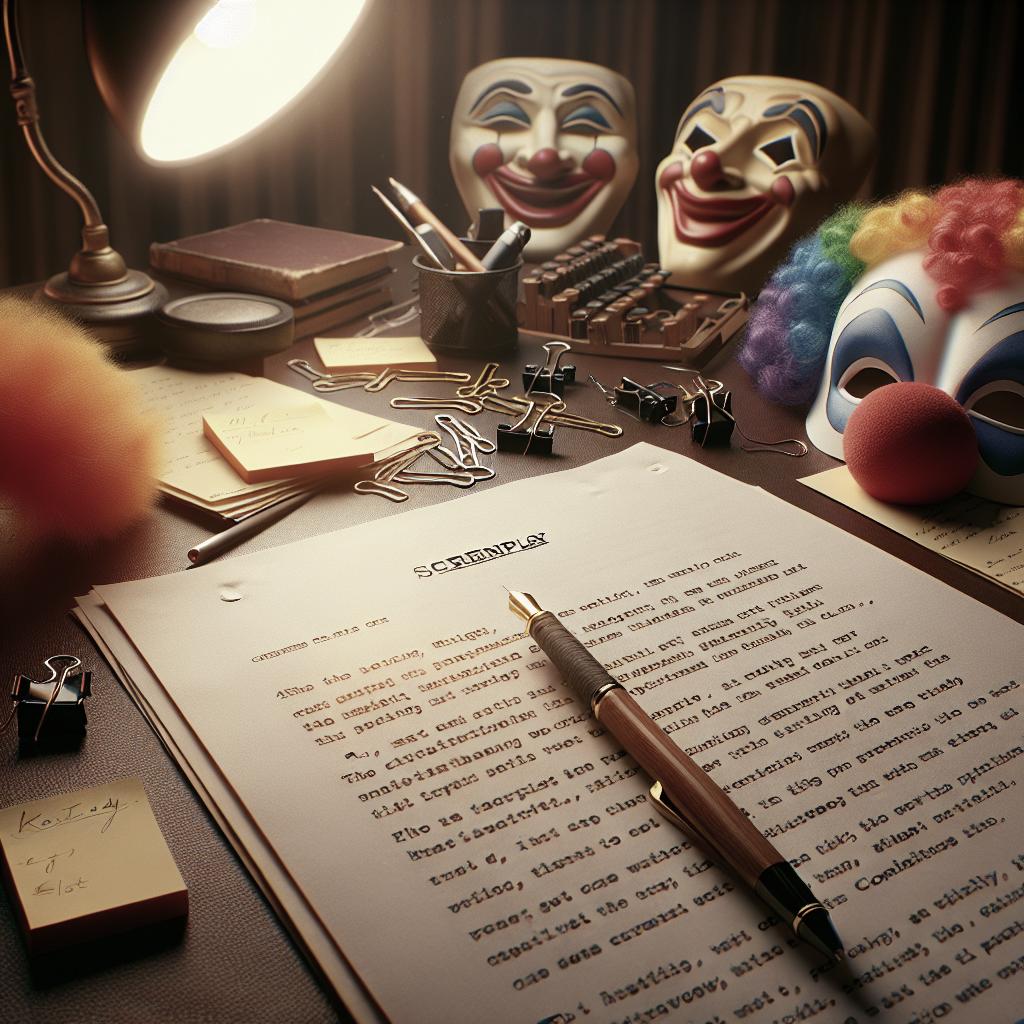
Writing a comedy sketch can seem like a daunting task, but with the right structure and creative mindset, anyone can craft a memorable and hilarious skit. This blog post breaks down the process into a simple, five-step framework: exposition, introducing the joke, heightening the joke, delivering the punch, and wrapping it up with a button. We’ll dive into each step with practical advice, examples, and tips to ensure your comedy sketch hits all the right notes. Whether you’re a seasoned comedian or just starting out, this guide will help you create and refine your comedic pieces to maximize laughter and impact.
How to write a comedy sketch
Creating a comedy sketch requires balancing creativity, timing, and structure. While the essence of humor can sometimes feel elusive, a well-defined process helps ground your writing. A good comedy sketch typically follows a narrative arc that introduces characters and settings, sets up a joke, escalates the joke through various situations, delivers a punchline, and finally, closes with a satisfying conclusion. Let’s dive deeper into each step.
1. EXPOSITION
Exposition is where you set the stage for your comedy sketch. This includes introducing your characters, establishing the setting, and laying the groundwork for the joke. The key is to provide just enough information to orient the audience without overwhelming them with details. Identify the core elements that your audience needs to understand, and keep it concise. Remember, the goal of the exposition is to create a believable world that the audience can buy into quickly. For example, if your sketch is set in an office, you might introduce a harried boss, a quirky employee, and the mundane, everyday office environment. This baseline will set the scene for the succeeding comic elements. The quicker and clearer your exposition, the sooner you can move on to the funny parts.
2. INTRODUCE THE JOKE
With the scene set, it’s time to introduce the joke. This is where you hint at the comedic premise, planting the seeds of humor that will grow as the sketch progresses. The joke should derive from a clear premise or incongruity within the context you’ve established. For example, if the boss in the office has an irrational fear of staplers, this is where you show the character’s odd behavior. Make sure the initial joke introduction isn’t too heavy-handed. Subtlety can be your ally here, making the eventual payoff much more rewarding. The introduction of the joke should engage the audience, making them eager to see where this quirky scenario will lead.
3. HEIGHTEN THE JOKE
The next step is to heighten the joke. This means escalating the comedic situation in a way that builds tension and amplifies the humor. Increasing the stakes or complicating the scenario often achieves this. If your boss character’s stapler fear affects their workload, add a layer where an important document must be stapled immediately, spurring panic. One way to escalate is through repetition with variation, where the same joke repeats but in increasingly absurd ways. Each iteration should build on the previous one, taking the audience on a roller-coaster of expectations and surprise. This process of heightening the joke sustains the audience’s interest and maximizes laughter.
Break
Taking a brief break from writing or reviewing your sketch can help you spot gaps in logic or areas that need more punch. Sometimes, stepping away gives you fresh eyes and new ideas. This pause is crucial for reviewing your progression for consistency and pacing before diving into the next steps.
4. PUNCH THE JOKE
Now it’s time to deliver the punch—the definitive moment where the joke reaches its peak. This is usually the climactic part of the sketch, where the tension you’ve built culminates in a strong, memorable laugh. If the previous stages are set up well, the punch should feel both surprising and inevitable, tying together the absurdity or conflict that has been brewing throughout the sketch. The punch can be delivered through dialogue, action, or a combination of both. It should provide a clear resolution or twist that taps into the humor built so far. For instance, if the office boss finally confronts the stapler, only for it to explode with confetti instead of staples, this unexpected payoff could leave the audience in stitches.
5. BUTTON
The button is the closing moment that ties everything together, leaving the audience with a final chuckle or a sense of satisfaction. Often, the button circles back to an earlier joke or reintroduces a motif from the sketch, providing a sense of closure. In the stapler sketch example, the boss might declare a new irrational fear—this time of paperclips—hinting at future antics. The key to a good button is brevity. It should be quick and clean, not dragging the sketch out, but delivering one last laugh before the curtain falls. Often, the button is a short line of dialogue or a quick visual gag that succinctly wraps up the comedic narrative.
That’s IT!
And there you have it—your guide to crafting a comedy sketch! By following these steps, you’ll be able to structure your humor effectively, ensuring your sketches are both funny and memorable. Let your creativity run wild within this framework, and always keep your audience’s laughter in mind.
| Stage | Description |
|---|---|
| Exposition | Sets the stage by introducing characters, setting, and basic context. |
| Introduce the Joke | Establishes the comedic premise or incongruity. |
| Heighten the Joke | Escalates the situation, building tension and increasing humor. |
| Punch the Joke | Delivers the climactic moment of humor, the peak of the sketch. |
| Button | Wraps up the sketch with a final, satisfying joke or twist. |