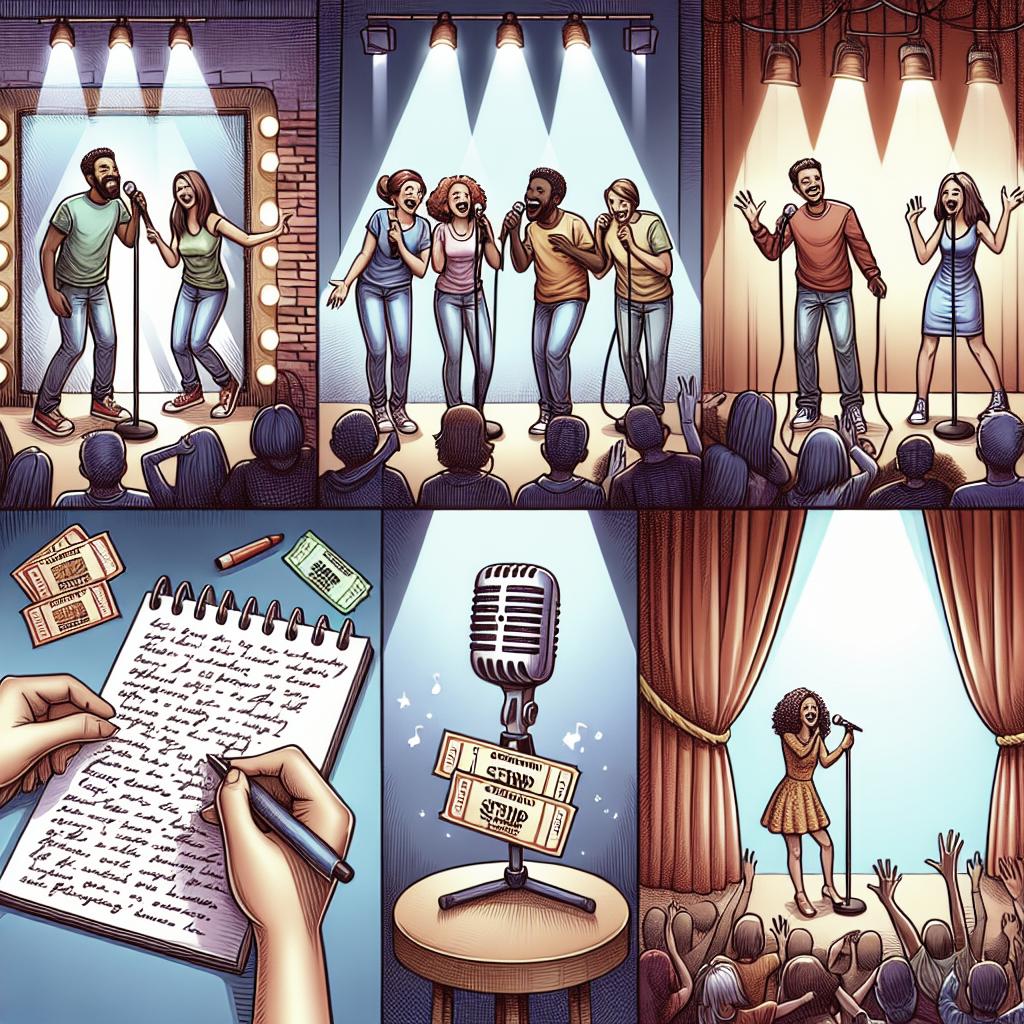
Starting your journey into the exciting and nerve-wracking world of stand-up comedy can be both thrilling and intimidating. This blog post aims to guide you through each step of the process, whether you’re writing your first set, performing on stage for the first time, or trying to market yourself effectively. We’ll start with storytelling techniques, delve into tips for crafting jokes, and offer advice on creating a strong performance. Additionally, we’ll explore marketing strategies and provide insights from seasoned comedians to help you achieve success in the stand-up comedy scene. Buckle up and get ready to turn your humor into your new gig!
Stories are the medium used to deliver facts, gifs, and jokes.
Comedy is inherently linked to storytelling. The best comedians are adept storytellers who weave facts, gifs, and jokes into compelling narratives that capture the audience’s attention. A well-told story can make your jokes more impactful, providing context and building a rapport with your audience that makes the punch line hit that much harder. Start by thinking of a story where something funny or unexpected happened to you. Break it down into the elements that made it funny—was it the timing, the absurdity, or a particular person’s reaction? Is there a universal truth or relatable experience embedded in your story? These are the nuggets of gold you will polish into your stand-up routine.
Want to hear more about my adventures with standup? Follow the journey here.
As someone who’s recently plunged into the world of stand-up comedy, I’ve experienced the highs and lows that come with trying to make people laugh. From writing my first sets to facing my fears on stage, I’ve gathered a wealth of knowledge and I’m thrilled to share these insights with you. Following this journey, you’ll get firsthand accounts of bombing a set and the euphoric feeling of nailing a performance. So, join me as I navigate open mics, sharpen my wit, and strive toward those coveted moments of comedic brilliance. Stick around for stories, tips, and more!
TIPS FOR WRITING STAND-UP COMEDY
PICK A POINT OF VIEW (POV)
Your point of view (POV) is the lens through which you perceive and narrate the world around you. It should be unique and personal, giving the audience a fresh perspective. Consider your own experiences, background, and worldview—what makes your perspective different from others? To develop your POV, observe your reactions to everyday situations. Document these observations and reflect on why they evoke strong emotions in you. This personal angle will become the cornerstone of your comedy, making your material relatable yet unique.
FIND THE COMEDIC CONFLICT
Conflict is at the heart of any good comedy piece. Identify the conflict in your story—is it between you and another person, a situation, or even yourself? Highlighting the absurdities and incongruities that arise from these conflicts can turn mundane situations into comedic gold. Consider classic comedic scenarios like misunderstandings, exaggerated expectations, or ironic twists. Exploit these conflicts and amplify them to draw out humor. The more relatable the conflict, the more likely your audience will connect and laugh with you.
TAP YOUR AUTHENTIC, FUNNY SELF
Authenticity is key in stand-up comedy. Audiences can sense when you’re being genuine and when you’re not. To tap into your authentic self, embrace your quirks, idiosyncrasies, and unique way of looking at the world. Reflect on the times you naturally make people laugh in everyday life. What do you talk about? What’s your delivery like? Incorporating these elements into your stand-up routine will make you more relatable and engaging.
DON’T ATTEMPT TO BOTH WRITE AND ANALYZE YOUR MATERIAL AT THE SAME TIME
When writing comedy, separate the creative process from the analytical process. Trying to edit while writing can stifle your creativity. Write first and allow your ideas to flow uninhibited; analyze and refine them later. Start with a brainstorming session where you jot down every funny idea that comes to mind. Once you have a rough draft, revisit it to cut out what doesn’t work and enhance what does.
GET INTO FLOW
The state of flow is when you’re fully immersed and focused on your writing, often losing track of time. To achieve this, eliminate distractions and set a timer to write continuously for a set period without interruption. Creating a routine or ritual can also help trigger the flow state. It might be something simple like sitting in a particular chair or listening to a specific type of music. Find what works for you and stick to it.
LEARN THE MECHANICS OF WRITING COMEDY
Understanding comedic structures—such as set-ups, punchlines, and tags—is essential. A set-up introduces the premise, the punchline delivers the unexpected twist, and tags add additional layers of humor. Study these structures by analyzing jokes from established comedians. Break them down and see how they’ve constructed their material. Mimic these techniques in your writing until you find your own rhythm.
WRITE EVERY DAY
Consistency is crucial for honing your comedic writing skills. Set aside time each day to write, even if it’s just for a few minutes. This daily practice will keep your mind sharp and your material fresh. Treat comedy writing like muscle memory; the more you exercise it, the stronger it becomes. Keep a journal of ideas and revisit them regularly to refine and expand your jokes.
ALLOW IDEAS TO EVOLVE
Comedy is not static. Your material should evolve over time. Don’t be afraid to revisit and rework your jokes as you gain more experience and refine your comedic voice. Observe how different audiences react to your material and be open to adapting it based on their feedback. Flexibility will allow your act to grow and stay relevant.
DON’T JUST USE ONE WRITING STRATEGY
Diversify your writing strategies to keep your material dynamic. Experiment with different formats like storytelling, one-liners, and observational humor. Each approach has its unique way of engaging the audience. Switching up your strategies will also help you break out of creative ruts. If you’re stuck, try writing a monologue or sketch to open up new comedic avenues.
CONTINUALLY SWITCH AROUND MATERIAL TO CREATE A STRONGER, MORE CONSISTENT SET
Don’t settle on the first version of your set. Continually tweak and rearrange your material until it forms a cohesive and compelling whole. Pay attention to the pacing and how each joke flows into the next. Seek feedback from trusted friends or fellow comedians. They can offer valuable perspectives that help you refine and strengthen your set.
DON’T WORRY ABOUT SPELLING OR GRAMMAR WHEN WRITING
When you’re in the creative process, focus on getting your ideas down without worrying about spelling or grammar. The goal is to capture the essence of your humor first; you can always clean up the language later. Remember, spoken comedy is different from written prose. What matters most is how the words sound and how they flow when delivered verbally.
DON’T STEAL MATERIAL
Originality is paramount in comedy. Using someone else’s material not only compromises your integrity but also stunts your growth as a comedian. Stick to creating your own content. If you find yourself unconsciously mimicking another comic’s style, take a step back and refocus on what makes your voice unique. Authenticity is what will ultimately set you apart.
COMEDY IS ABOUT SELF-EXPRESSION
At its core, comedy is a form of self-expression. It’s your chance to share your perspectives, insights, and quirks with the world. Embrace this opportunity and let your personality shine through your material. Your authentic self is your most valuable asset. Audiences resonate with comedians who are unapologetically themselves, so don’t be afraid to be vulnerable and raw in your performance.
DON’T REQUIRE PERFECTION
Perfectionism is the enemy of progress. Don’t expect your material to be perfect from the get-go. Comedy is a constantly evolving art form, and there will always be room for improvement. Allow yourself to make mistakes and learn from them. The goal is to keep growing and getting better, set by set.
TIPS FOR PERFORMING STAND-UP COMEDY
DON’T MEMORIZE EVERY WORD OF YOUR PERFORMANCE
While it’s essential to know your material, memorizing every single word can make your delivery sound robotic. Instead, memorize key points and allow yourself room to riff and adapt on stage. This approach will make your performance feel more natural and engaging. You’ll have the flexibility to respond to the audience’s reactions, making the experience more interactive.
FOCUS ON WHAT YOU WANT TO TELL THE AUDIENCE, NOT ON YOURSELF
It’s easy to get caught up in self-consciousness when performing, but your primary focus should be on communicating your jokes and stories to the audience. Their laughter and engagement are what matter. Concentrate on the message you want to convey and let your passion for the content guide your performance. This outward focus will help alleviate stage fright and enhance your delivery.
TALK TO THE AUDIENCE, NOT AT THEM
Comedy is a two-way street. Engage with your audience as if you’re having a conversation with them. Make eye contact, react to their responses, and let your personality shine through. By creating a dialogue, you’ll forge a stronger connection with the audience, making your performance more dynamic and enjoyable for both parties.
PERFORM SEVERAL TIMES A WEEK
The more you perform, the better you’ll become. Aim to get on stage multiple times a week to practice your material and build your stage presence. Repetition is key to mastering your craft. Open mics are an excellent venue for frequent performances. Use these opportunities to test new material, refine existing jokes, and gain confidence in your delivery.
FIND A HOME VENUE
Having a regular venue where you perform can be incredibly beneficial. It allows you to build a rapport with a consistent audience and experiment with new material in a familiar setting. A home venue can also provide a supportive community of fellow comedians who can offer valuable feedback and encouragement. Seek out a local comedy club or open mic night to establish your base.
CREATE A SET LIST
A set list serves as a roadmap for your performance. It helps you organize your material and ensure a smooth flow from one joke to the next. Include transitional lines to maintain momentum between bits. Having a set list also provides a safety net, giving you a point of reference if you get lost or forget a joke during your performance. Keep it visible but discreet on stage.
JUST BECAUSE YOU GET A LAUGH DOESN’T MEAN YOU’RE “DONE”
Getting laughs is gratifying, but don’t rest on your laurels. Continuously strive to improve and refine your material. Analyze what worked and what didn’t, and use that insight to enhance your set. Even successful jokes can benefit from tweaks and refinements. Aim for consistency in your performance, ensuring that every joke lands as intended.
DON’T PICK ON AUDIENCE MEMBERS
Making fun of audience members can quickly turn the crowd against you. While it’s fine to interact with them, do so in a way that’s playful and inclusive, not mean-spirited. Respect your audience and avoid targeting individuals in a hurtful manner. Focus on creating an enjoyable experience for everyone.
BALANCE WRITING AND PERFORMING
Both writing and performing are crucial aspects of stand-up comedy. Allocate time for both activities to ensure a well-rounded approach. Write regularly to keep your material fresh, and perform frequently to hone your delivery. Balancing these two elements will enable you to develop a strong and dynamic act that resonates with audiences.
DON’T TAKE IT OUT ON THE AUDIENCE. IT’S NOT THEIR FAULT NOBODY SHOWED UP.
Low turnouts can be disheartening, but it’s important to maintain a positive attitude. Treat every performance, no matter the size of the audience, as an opportunity to hone your skills and improve your craft. Perform for the people who did show up as though it’s a full house. Their experience matters, and your professionalism will shine through regardless of the crowd size.
OPEN MICS ARE FOR TRAINING. USE THEM TO LEARN YOUR CRAFT
Open mics are excellent platforms for experimentation and growth. Use these opportunities to test new material, refine existing jokes, and build confidence in your stage presence. View open mics as practice sessions where you can learn from each performance. Embrace the feedback and use it to continuously improve your act.
DON’T SPEAK FORMALLY
Stand-up comedy is informal by nature. Keep your language conversational and approachable. Speaking too formally can create a barrier between you and your audience. Use everyday language and let your natural speaking style shine through. This approach will make your performance more relatable and engaging.
TIPS FOR MARKETING YOUR STAND-UP COMEDY
GET GOOD. THEN GET SEEN
Before you focus on marketing yourself, concentrate on honing your craft. The quality of your comedy is your best marketing tool. Once you’re confident in your material, start looking for ways to get noticed. Perform at local events, submit to comedy festivals, and create an online presence to showcase your talent. Building a solid foundation will make your marketing efforts more effective.
BE REMARKABLE
Stand out by being unique and memorable. What sets you apart from other comedians? Whether it’s your style, subject matter, or delivery, identify your unique selling points and emphasize them in your marketing. Create a compelling personal brand that reflects your comedic identity. This will help you attract both audiences and opportunities.
BE AROUND THE SCENE. NOT AN OUTSIDER
Immerse yourself in the comedy scene by attending shows, networking with fellow comedians, and participating in comedy-related events. Being present and engaged will help you build connections and gain visibility. Establishing yourself within the community can lead to valuable opportunities and collaborations. Stay active and involved to solidify your presence.
DON’T BE A JERK
Your reputation matters. Treat everyone with respect, from fellow comedians to audience members. Being professional and courteous will earn you respect and support within the comedy community. A positive reputation can open doors and lead to new opportunities. Conversely, negative behavior can damage your career. Be kind and professional at all times.
NETWORK
Building relationships within the comedy industry is essential. Attend networking events, engage with industry professionals, and seek mentorship from experienced comedians. Networking can lead to collaborations, bookings, and valuable advice. Approach it with authenticity and a willingness to learn.
USE YOUTUBE EFFECTIVELY
YouTube is a powerful platform for reaching a wider audience. Create a channel to showcase your performances, sketches, and comedic content. Optimize your videos with relevant keywords and engaging thumbnails. Consistently upload quality content to build a following. Engage with your audience through comments and social media to foster a community around your comedy.
USE SOCIAL MEDIA
Leverage social media platforms to promote your comedy and connect with fans. Share clips of your performances, behind-the-scenes content, and engage with your followers. Stay active on platforms like Instagram, Twitter, and Facebook. Use hashtags, respond to comments, and collaborate with other comedians to expand your reach.
BE PROFESSIONAL
Professionalism goes a long way in comedy. Show up on time, be prepared, and follow through on commitments. Treat comedy as a business and take your responsibilities seriously. A professional attitude will earn you respect and credibility in the industry. It also sets a positive example for others.
START AN OPEN MIC IN YOUR TOWN TO GET MORE STAGE TIME
If opportunities for stage time are limited, create your own. Starting an open mic night in your town can provide a platform for you and other comedians to perform regularly. Organizing an open mic also positions you as a community leader, enhancing your visibility and reputation. It’s a proactive way to gain experience and exposure.
BE UNIQUE Embrace your individuality and let it shine through your comedy. Audiences are drawn to authenticity and originality. Celebrate what makes you different and use it to create a distinctive comedic voice. Being unique will set you apart in a crowded field, making you more memorable and appealing to audiences and industry professionals.
TIPS FOR BECOMING SUCCESSFUL IN STAND-UP COMEDY
BEING FUNNY IS A REQUIREMENT TO GET INTO COMEDY, NOT AN ADVANTAGE
While being funny is essential, it’s just the starting point. To succeed, you need to combine your humor with hard work, persistence, and continual learning. Writing, performing, and networking are all crucial components of a successful comedy career. Remember, talent alone won’t carry you to the top. It’s the combination of skill, dedication, and resilience that will make you stand out.
LEARN YOUR CRAFT
Study comedy diligently. Analyze famous comedians, read books on comedy writing, and watch performances to understand the nuances of comedic timing, delivery, and structure. Invest time in honing your craft through practice and continuous improvement. The more you learn, the more versatile and dynamic your comedy will become.
FAIL FAST
Failure is an inevitable part of the comedic journey. Embrace it as a learning opportunity rather than a setback. The quicker you fail, the quicker you learn and improve. Take risks and push your boundaries. Each failure brings you closer to success and helps you develop a thicker skin and sharper instincts.
DON’T MOVE TO A MAJOR MARKET JUST BECAUSE
Major comedy markets like New York or Los Angeles can be tempting, but only move if you’re truly ready. Establish a strong foundation and gain experience in your current market before making the leap. Moving prematurely can be overwhelming and counterproductive. Focus on building a solid comedy repertoire and network before taking that step.
LEARN FROM PEOPLE THAT ARE WHERE YOU WANT TO BE
Seek guidance from seasoned comedians who have achieved the success you aspire to. Study their careers, understand their journey, and learn from their experiences. Mentorship from experienced comedians can provide invaluable insights, shortcuts, and advice. Be open to learning and incorporate their wisdom into your own path.
LOOK AT THE BIG PICTURE
While individual performances and small successes are important, keep your eye on the bigger picture. Focus on long-term goals and strategic plans to advance your career. Maintain a balance between short-term achievements and long-term vision. This perspective will help you navigate challenges and stay motivated on your journey.
BE CAUTIOUS IF YOU WANT TO BE A DIRTY COMIC
Edgy or dirty comedy can be polarizing. While it may attract a niche audience, it can also limit your opportunities. Be mindful of your choice and its potential impact on your career. If you choose this path, ensure your material is clever and well-crafted rather than relying solely on shock value. Quality and originality will always be key.