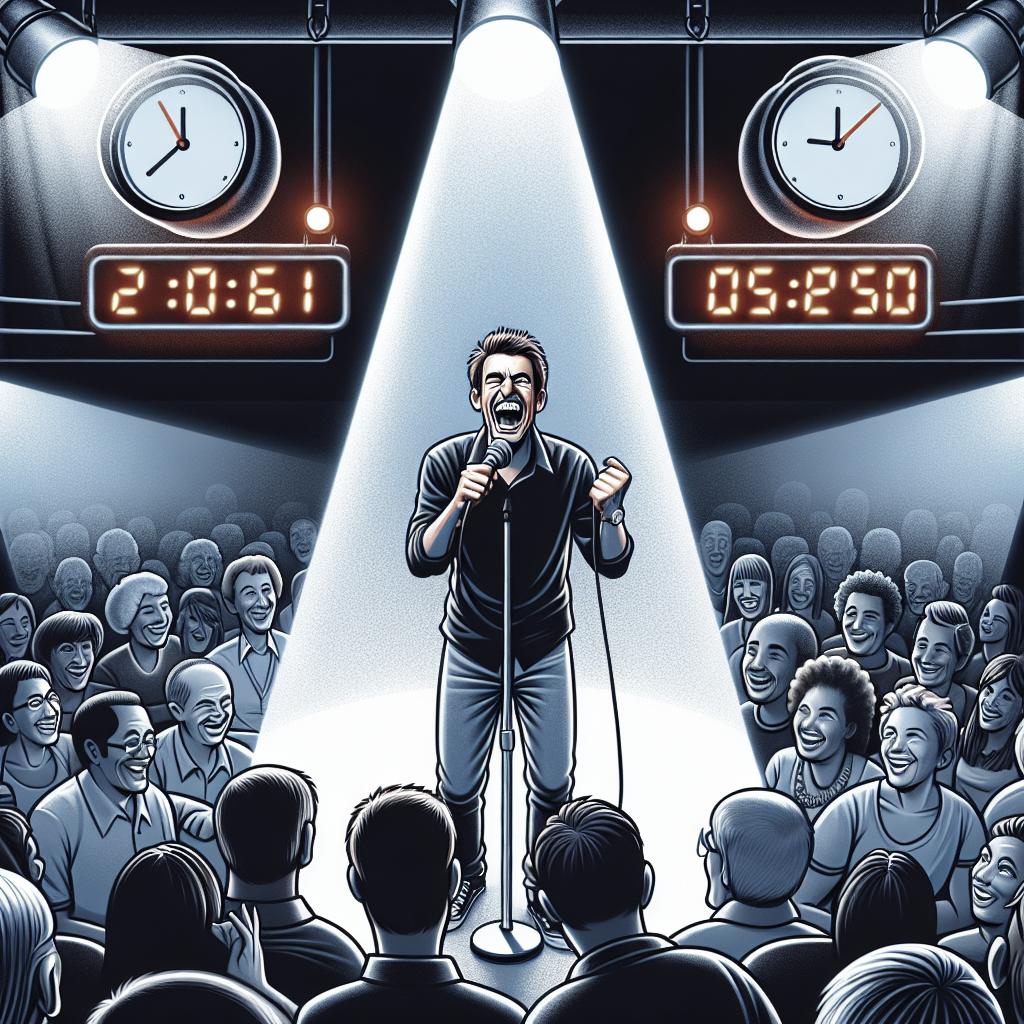
Comedy is a craft that combines timing, delivery, and content. Whether you’re an aspiring comedian or someone looking to muster up enough courage for an open mic night, understanding the structure of a comedy set is crucial. A common starting point is the five-minute set, an essential skill that serves as the foundation for longer performances. In this post, we’ll explore how long a comedy set typically is, focusing specifically on how to write a compelling five-minute set. You’ll learn the importance of this shortened format, some crucial comedy terminology, how to outline your set, and tips to make your jokes land better. By the end, you’ll have a blueprint for crafting a tight, memorable five-minute comedy set.
How to write a 5-minute comedy set
A five-minute comedy set is like a concentrated shot of your humor. It requires precision, a clear structure, and the ability to deliver your jokes with impeccable timing. Start by brainstorming personal anecdotes, observations, and one-liners that reflect your comedic voice. Write everything down—this initial stage is all about amassing material. Don’t worry about editing just yet; focus on getting all of your ideas out. Next, sift through your material and identify your strongest bits. Aim for 4-5 jokes or 2-3 stories that have a beginning, middle, and end. This ensures that your set has a variety of pacing and keeps the audience engaged. Once you have your main pieces, work on transitions that can seamlessly connect each joke or story. Your transitions are as crucial as your main material; they maintain the flow and make your content coherent.
First, here’s why you need a five-minute set
A five-minute set is a comedian’s business card. It’s often the standard length for initial auditions, open mic nights, and comedy competitions. In this limited timeframe, you need to showcase your style, timing, and delivery skills. Comedy bookers and talent scouts often gauge your potential as a comedian based on this short set. Moreover, a solid five-minute set gives you the opportunity to perfect your material. This isn’t just about making people laugh; it’s about mastering your performance, understanding audience reactions, and refining your comedic voice. A polished five-minute set can easily be expanded into longer performances as you gain experience and confidence.
Next, some vocab.
Before diving deeper, let’s get familiar with some comedy lingo. Terms like “punchline,” “setup,” “tag,” and “callback” are vital tools in a comedian’s arsenal. The “setup” is the premise or context for your joke; the “punchline” is the twist or surprise that makes it funny. A “tag” is an additional joke that stems from the punchline, and a “callback” is a reference to an earlier joke, creating a layered and cohesive set. Understanding these terms can significantly enhance your writing process. For instance, knowing how to craft a compelling setup followed by a strong punchline becomes second nature with practice. Using tags and callbacks effectively can turn a good joke into a great one, increasing the overall impact of your set.
Now you’re ready to outline!
With your vocabulary and material in hand, it’s time to outline your set. Start by selecting the strongest jokes and placing them in an order that flows naturally. Your opening joke should grab attention and set the tone for your performance. Follow it with filler material, and save your strongest punchline for the end, creating a lasting impression. Use bullet points to list your jokes and transitions succinctly. This will serve as your roadmap during rehearsals. Aim for a mix of stories and one-liners to keep things dynamic. Make sure to time your practice runs to ensure you stay within the five-minute limit. Adjust your material as needed based on this timing.
Tips for making it WORK.
Crafting a five-minute set is one thing; delivering it effectively is another. Practice is key. Rehearse in front of a mirror, then in front of friends or family. Record your performances to critique your delivery, body language, and timing. Pay attention to your audience’s reactions during these practice runs and tweak your material accordingly. Remember, confidence is essential. A well-delivered average joke can sometimes be funnier than a poorly delivered great joke. Use gestures, facial expressions, and changes in vocal tone to enhance your performance. Always be prepared to adapt; if a joke isn’t landing, move on smoothly to the next one.
Share this:
If you found these tips helpful, share this post on social media or email it to friends who might benefit. Comedy is a communal art form, and sharing knowledge helps everyone improve.
Related
Interested in more tips on public speaking or performance arts? Check out our related posts on effective public speaking strategies and mastering the art of storytelling.
Want to take a class with me?
If you’re eager to dive deeper into the art of comedy, consider taking one of my comedy writing workshops. We cover everything from joke structure to performance techniques, providing hands-on experience and personalized feedback. Sign up today and start perfecting your craft!
| Section | Main Points |
|---|---|
| Introduction | Overview of writing and delivering a five-minute comedy set. |
| How to write a 5-minute comedy set | Gather and refine material, focus on transitions. |
| First, here’s why you need a five-minute set | Importance in auditions and open mics; mastering timing and content. |
| Next, some vocab. | Understanding comedy terms like punchline, setup, tag, and callback. |
| Now you’re ready to outline! | Create a roadmap of jokes and transitions; time your set. |
| Tips for making it WORK. | Practice delivery, record performances, be adaptable, use body language and vocal changes. |